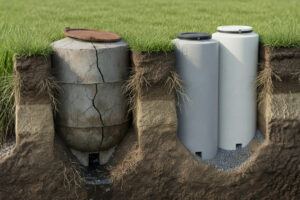
There’s a good chance you’ve never actually seen your septic tank. Most homeowners haven’t. It sits quietly underground, handling every flush, shower, and load of laundry without ever asking for attention, and that’s exactly why so many people forget it’s there until something goes wrong.
If you own a home in Brighton, Highlands, or Milford, MI, that underground system is doing more work than the local sewer network in nearby towns connected to municipal lines. According to the U.S. Environmental Protection Agency, more than one in five U.S. households rely on a septic or small community system to treat their wastewater, and Michigan homeowners lean on these systems more than most. The Michigan Department of Environment, Great Lakes, and Energy reports that the state has more than 1.3 million septic systems in use today.
That’s a lot of tanks, a lot of drainfields, and a lot of homeowners who benefit from understanding how to keep their system healthy.
This guide walks through what septic system maintenance looks like in 2026, how often you should schedule septic tank pumping, what a professional inspection catches, and the everyday habits that keep a system running the way it’s supposed to.
Why Septic System Maintenance Matters in 2026
A septic system maintenance routine isn’t just about remembering when you last pumped the tank.
After all, a septic unit isn’t just a buried tank. It’s a full treatment process: wastewater flows into the tank, solids settle to the bottom, and the remaining liquid moves out to the drainfield, where the soil finishes the job. Every part of that chain depends on the others working correctly.
The stakes are higher here than in most parts of the country. EGLE has estimated that a meaningful share of Michigan’s septic systems are failing at any given time, some without the homeowner even realizing it. Nationally, the EPA puts septic system failure rates somewhere between 10 and 20 percent over a system’s lifetime.
That doesn’t mean your system is headed for trouble. It just explains why a little consistency goes a long way. A few habits worth building into your routine:
- Keep a written or digital record of every pumping, inspection, and repair.
- Know roughly where your tank and drainfield sit on the property.
- Notice changes in drainage speed, odor, or how the yard looks near the system.
- Spread out heavy water use instead of running it all at once.
- Keep cars and equipment off the drainfield.
- Watch what goes down the drains and toilets.
For households across Brighton, MI, and the surrounding Livingston, Oakland, and Genesee County communities, these are small habits that prevent a lot of expensive surprises.
How Often Should You Schedule Septic Tank Pumping?
There’s no single answer that works for every home, and anyone who tells you otherwise is oversimplifying it.
The EPA generally recommends pumping every three to five years, though the right interval depends on how many people live in the house, how large the tank is, and how much wastewater the household generates. Watkins Septic & Drain works within a similar window, recommending cleaning and pumping every two to five years depending on household size.
What actually shifts your pumping schedule:
| Factor | Why It Matters |
| Household size | More people means more solids entering the tank over time |
| Tank size | Smaller tanks fill faster and need more frequent attention |
| Water usage habits | Heavier daily use puts more demand on the system |
| Laundry and shower patterns | Concentrated high-water activities add strain |
| Solids buildup | Once solids accumulate, usable tank capacity shrinks |
| System age and history | Older or previously troubled systems deserve closer monitoring |
If you’ve recently bought a home in Milford, MI, and don’t know when the tank was last serviced, that’s worth addressing early. Watkins Septic & Drain also offers septic tank locating, which is genuinely useful when a homeowner isn’t sure where the tank even is.
The Importance of an Annual Septic Inspection
Septic tank pumping and inspecting aren’t the same task, even though people often lump them together. Pumping clears out solids. An inspection shows how the system is holding up overall.
The EPA recommends inspecting a system every one to three years, with more complex systems needing more frequent checks. An annual septic inspection is a smart habit for homeowners who want to stay ahead of problems, particularly after a change in occupancy, a history of issues, or before a real estate transaction.
A thoroughseptic inspectiontypically checks the tank’s condition, sludge and scum levels, access points, distribution components, and drainfield performance. Watkins Septic & Drain includes an inspection as part of its routine pumping service, which means potential issues get flagged during a visit you’re already scheduling.
Why Drain Field Care Belongs on the Checklist
The drainfield does the quiet, unglamorous work of finishing the treatment process, and it’s easy to overlook. Drain field care comes down to a few consistent rules:
- Never park or drive over the drainfield.
- Don’t build structures on top of it.
- Watch for standing water or patches of unusually green grass.
- Keep excess surface water from draining toward that area.
The EPA specifically warns against parking vehicles or heavy equipment on a drainfield, since the added weight can damage the pipes underneath.
Septic Warning Signs Every Homeowner Should Know
Septic problems rarely show up all at once. More often, they start small: a drain that empties a little slower than usual, a faint smell near the yard, a toilet that gurgles when it shouldn’t.
Signs worth paying attention to:
| Warning Sign | What It May Mean |
| Several slow drains at once | A broader drainage issue, not just one clogged fixture |
| Gurgling toilets or sinks | Air trapped behind a restriction in the line |
| Sewage odor outdoors | Wastewater isn’t moving or treating properly |
| Soggy or bright green patches near the drainfield | Possible drainage or overflow issue |
| Repeated backups | A pattern that needs a professional look, not a one-time fix |
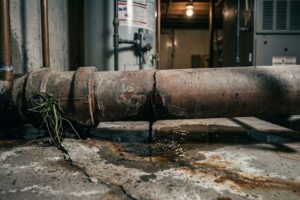
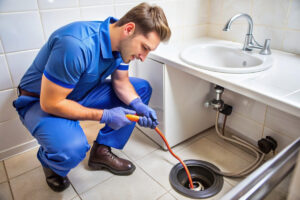
Always remember that one slow sink usually isn’t the cause of an alarm, but several fixtures acting up together can be. This is where drain cleaning services and diagnostics matter. Watkins Septic & Drain offers sewer and drain cleaning along with camera inspections, using a waterproof camera to see exactly what’s happening inside the line, whether that’s a root intrusion, a deteriorating pipe, or a blockage further down the system than a homeowner could reach on their own.
Never Flush List: What Should Stay Out of Your Septic System?
Your toilet handles two things well: waste and toilet paper. Everything else is a gamble.
Your never-flush list includes:
- Wipes, even ones labeled flushable
- Paper towels and facial tissues
- Feminine hygiene products
- Cotton swabs and dental floss
- Diapers and cat litter
- Grease and cooking fat
- Household chemicals, paint, and solvents
- Unused medications
The EPA is direct about this: don’t treat the toilet like a trash can, and avoid flushing chemicals or medication, since they can eventually reach groundwater.
As for septic additives that promise to boost performance, Watkins Septic & Drain has been clear that they aren’t necessary to keep a system healthy. Professional evaluation does more good than a bottle from the hardware store.
Water Conservation Tips That Actually Help
Every gallon that goes down a drain eventually has to move through your septic system. Using water thoughtfully isn’t just about the utility bill.
Some water conservation tips worth adopting include:
- Fix leaking faucets and running toilets promptly.
- Spread laundry loads across the week rather than running several back-to-back.
- Choose water-efficient fixtures when replacing old ones.
- Keep showers reasonably short.
- Avoid letting water run unnecessarily during everyday tasks.
None of this means using less water than you need. It just means not sending more into the system than it can comfortably handle at once.
Your 2026 Septic Resolutions: A Simple Homeowner Checklist
If you want realistic septic resolutions for 2026, keep the list short enough to actually follow:
- Locate your septic tank
- Confirm the last pumping date
- Pull your inspection and service records
- Set a reminder for the next service date
- Identify your drainfield boundaries
- Keep vehicles and equipment off it
- Review household water habits
- Stick to the never-flush list
- Watch for slow drains, odors, or wet patches
- Call a professional when something seems off
The System Beneath Your Yard Deserves a Little Attention
A well-maintained septic system is easy to forget about, which is exactly the goal. Regular septic health tips like these, paired with proper septic tank pumping, maintenance, and inspection, can help keep it that way. Paying attention to septic warning signs, scheduling an annual septic inspection when appropriate, and keeping up with basic drain field care can also help catch potential problems before they become expensive repairs.
For homeowners across Brighton, Highlands, Milford, MI, and the surrounding Livingston, Oakland, and Genesee County communities, Watkins Septic & Drain LLC has been a family-owned name in septic and drain service since 1979, offering pumping, tank locating, riser installation, sewer and drain cleaning, camera inspections, hydro jetting, and related services.
If it’s been a while since your tank was serviced, or something about your drains has felt off lately, reach out to us at 248-249-3574 to have it checked before it becomes a bigger job.